START TO LEARN KOREAN LANGUAGE NOW
TO SECURE YOUR STUDENTS BURSARY

Some Korean universities offer up to 100% student bursaries for new students who have passed certain TOPIK Levels. If you are willing to put in the effort your academic and student accommodation in Korea can be covered by the Korean government as a reward for your effort.
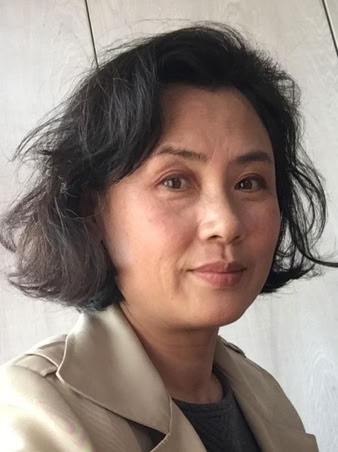
Kate Boesak 송봉진 (nee Song) is a TOPIK Certified Instructor who teaches Korean for TOPIK qualifications both online and in person. As indicated by her surname she lives in Cape Town, South Africa since 2004 having married a South African.
You can contact Kate by WhatsApp to take her classes or organise classes at your school.
TOPIK (Test of Proficiency in Korean)
(Korean: 한국어능력시험),
TOPIK is a standardized exam designed to assess the Korean language proficiency of non-native speakers. Administered by the National Institute for International Education (NIIED), a branch of South Korea’s Ministry of Education, it’s widely recognized by universities, employers, and government institutions in South Korea and globally. The test evaluates skills in reading, listening, and writing (with speaking recently introduced in some formats), serving as a benchmark for those seeking to study, work, or immigrate to South Korea.
Why TOPIK?
Most Korean universities teach in Korean language so learning Korean is crucial to being successful in your studies and opportunities to secure work in Korea. Some Korean universities offer tuition bursaries from 30% right up to 100% for students to attain TOPIK Levels 3, 4 and 5 with some including Living Support as well.
WHAT ARE THE TOPIK LEVELS?
TOPIK I
For beginners, covering sublevels 1 and 2.
It tests basic comprehension through reading (40 multiple-choice questions, 60 minutes) and listening (30 questions, 40 minutes), with a total score of 200.
Level 1 (80+ points) indicates basic survival skills—like greetings or ordering food—while Level 2 (140+ points) shows ability to handle simple conversations.
TOPIK II
For intermediate to advanced learners, covering sub levels 3 to 6. It includes reading (50 questions, 70 minutes), listening (50 questions, 60 minutes), and writing (4 short-answer/essay questions, 50 minutes), totaling 300 points. Scores determine levels: 120–149 for Level 3 (basic social interaction), 150–189 for Level 4 (broader comprehension), 190–229 for Level 5 (professional fluency), and 230+ for Level 6 (near-native mastery).
Since July 2014 (the 35th test), this two-tier format replaced an older system with beginner, intermediate, and advanced categories, streamlining evaluation. Results are valid for two years.
Purpose and Uses
TOPIK serves multiple practical purposes:
Education: Many South Korean universities require a minimum score (often Level 3 or 4) for admission, and higher levels (5 or 6) can boost scholarship chances, like the Global Korea Scholarship (GKS).
Employment: Companies in Korea, especially those hiring foreigners, often demand TOPIK scores (typically Level 4+) to verify language skills for professional roles.
Immigration: Certain visas, such as marriage or residency visas, may require TOPIK certification (e.g., Level 1 or 2) as proof of basic proficiency.
Personal Benchmark: Language learners use it to measure progress and set goals.
Administration
The test is offered six times a year in South Korea (January, April, May, July, October, November) and less frequently abroad, across 87 countries as of 2021. It’s traditionally paper-based (TOPIK PBT), but since 2023, an internet-based version (TOPIK IBT) has been phased in, with plans to fully transition online. A separate TOPIK Speaking test was piloted in 2021 and is now offered thrice yearly in some regions.
Historical Context
Introduced in 1997 by the Korea Research Foundation, TOPIK initially tested 2,274 people. It shifted oversight to the Korea Institute for Curriculum and Evaluation (1999–2010) before settling with NIIED in 2011. By 2012, over 1 million had taken it, with 180,000 participants in 2009 alone, reflecting its growing global reach amid the Korean Wave.
In essence, TOPIK is the gold standard for certifying Korean proficiency, bridging linguistic ability with real-world opportunities in South Korea. Whether for academia, career, or personal growth, it’s a key tool for non-native speakers navigating Korean language and culture.